Photography above and below French & Tye
_
By Sam Peters, Co-founder Planted
James Bell would no doubt blush at the suggestion he is on course to fulfil his destiny. But it is clear, when we meet at the stunning five-bedroom Dorset home he designed, that he is a man in control of his own trajectory.
Equally at ease in himself and the beautiful 4,700 sq ft property he and his wife Emma created, Bell is the son of an Army officer who carries himself with an understated air of calm and confidence befitting someone who has built a home—and a business—of the highest calibre.
The 48-year-old father of three, founder of Richmond Bell Architects in Salisbury, knew he wanted to be an architect from his early years at Cothill Preparatory in Oxfordshire, where the art and design centre was Bell’s happy place.
“I was lucky in one sense that I always knew I wanted to be an architect,” he tells me over coffee in the kitchen of Harefield Farmhouse in the tiny village of East Orchard, west of Shaftesbury. “At school I loved fine art, design and technology and coupled that with maths and physics at A-Level. I always had a pretty clear sense of where I wanted to go.”
Heavily influenced by Spanish-Swiss architect, engineer and artist Santiago Calatrava, Bell’s career, like most, has not always been smooth sailing. The 2008 financial crash, for example, presented a significant but ultimately creative and energising bump in the road. But his direction of travel has always been clear.
After graduating in architecture from Edinburgh University in 2001, where he spent six happy years amidst the enchanting historic volcanic city’s iconic Georgian architecture, Bell honed the skills required to design stunning homes of his own.
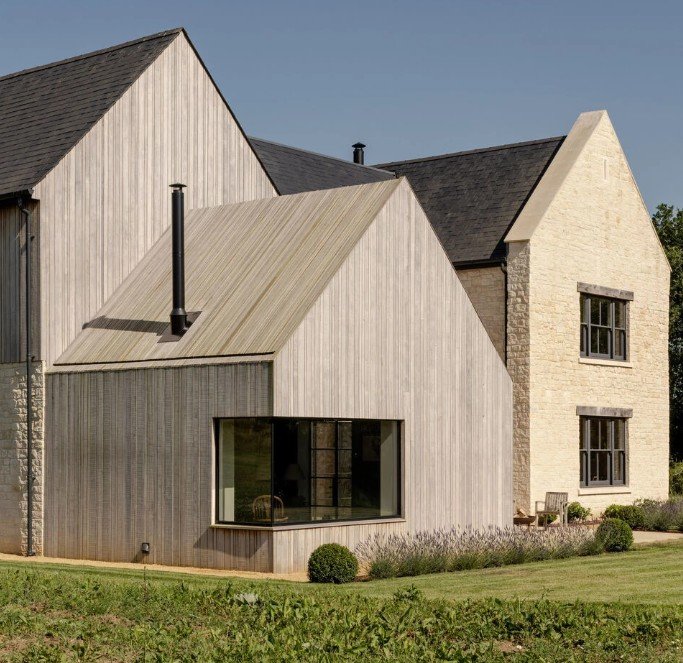
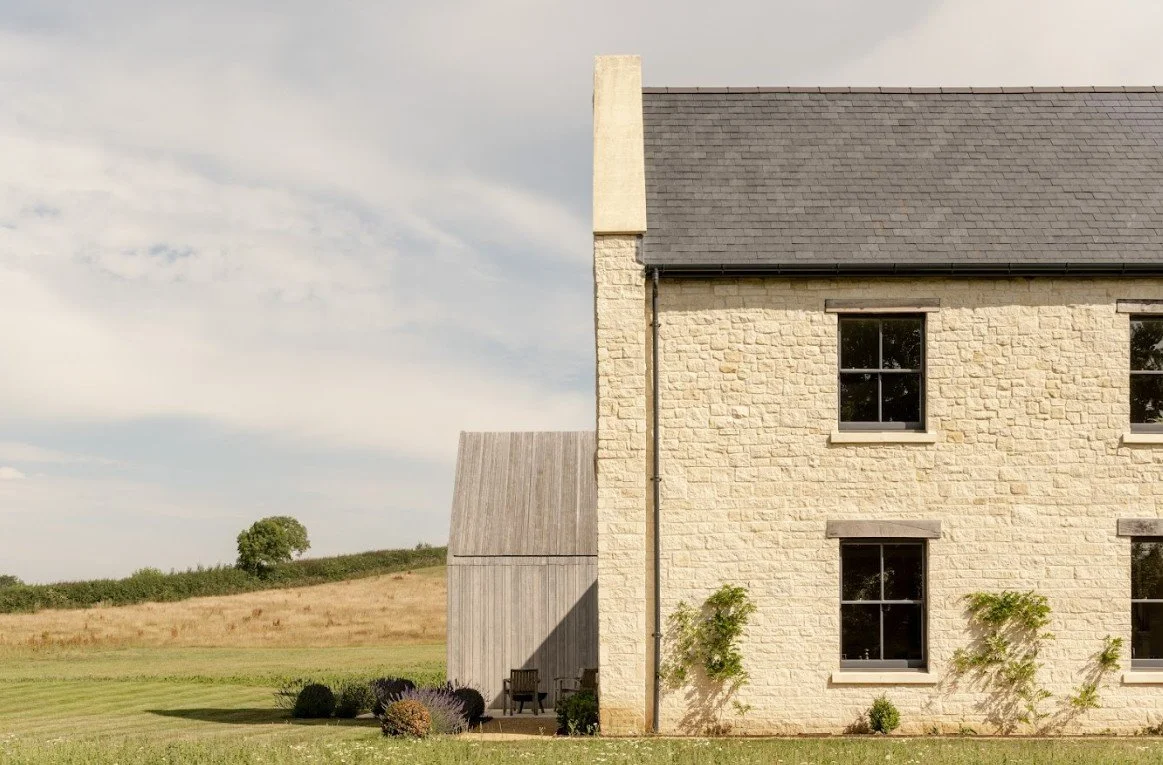
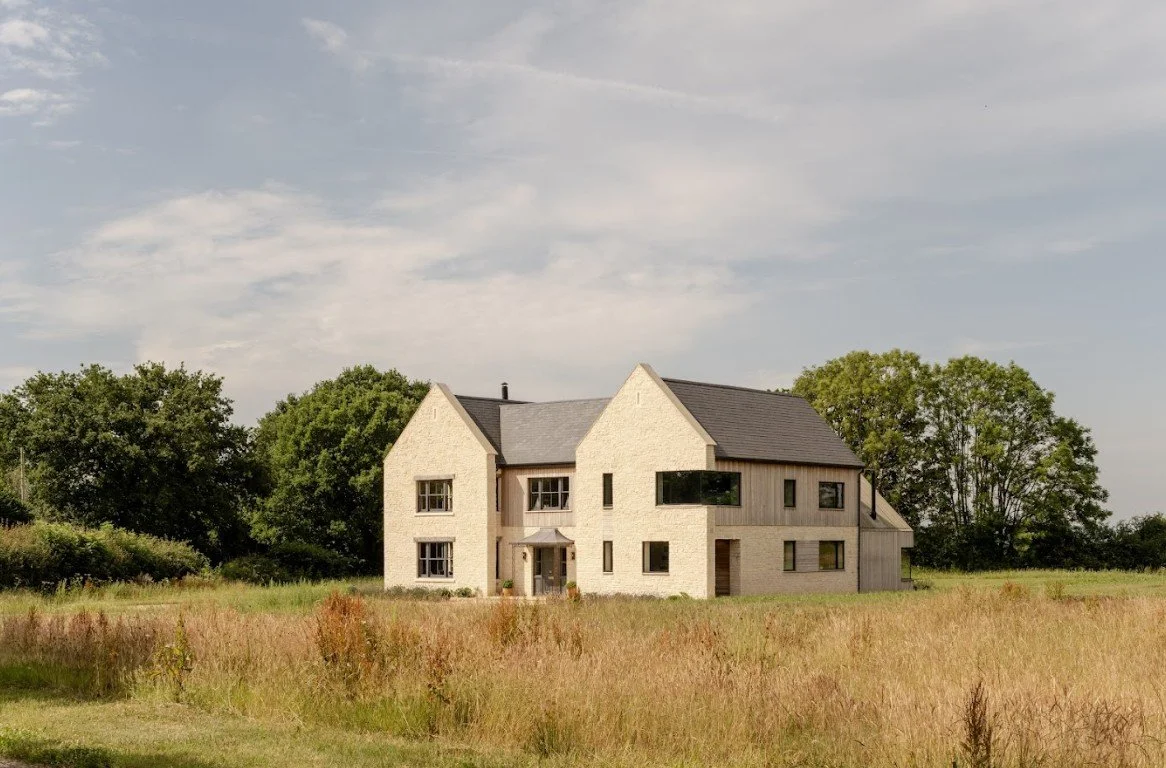
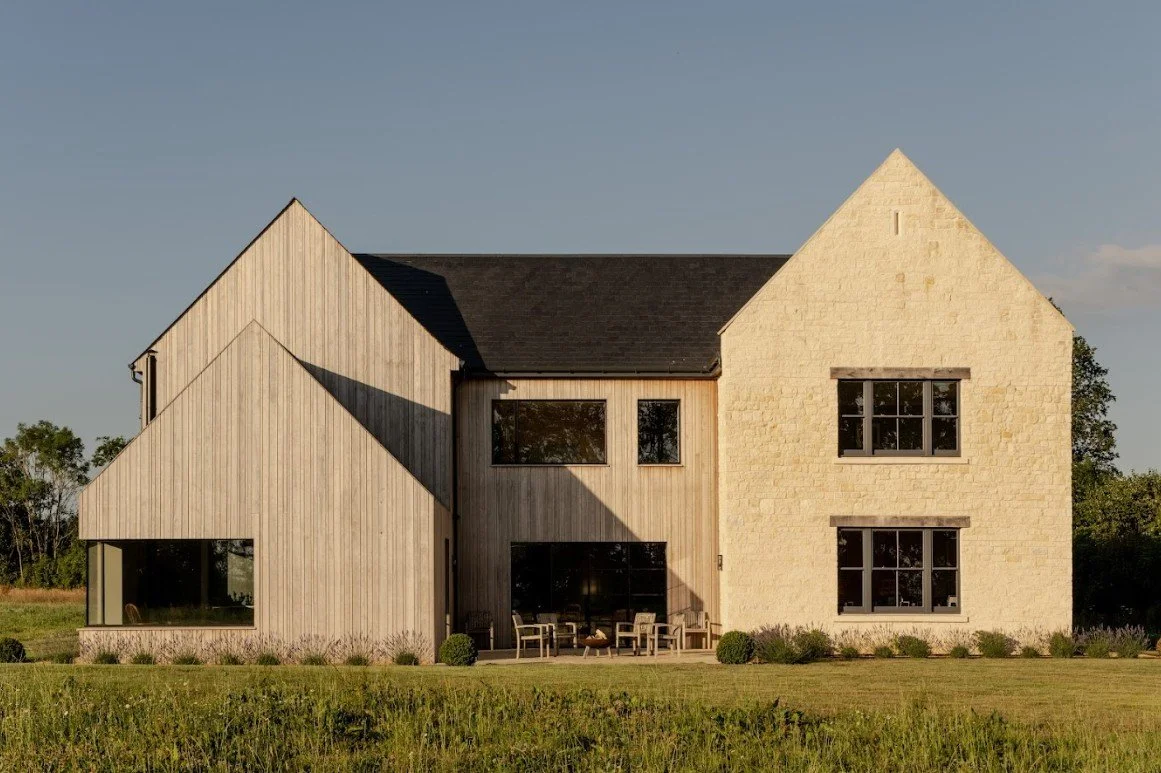
Harefield Farmhouse, completed in 2023 and tucked deep in the rolling Wessex landscape Thomas Hardy made famous, is most certainly a stunning home. High-quality stonework, using local Marnhull Stone forged during the Jurassic period, timber window lintels and immaculate finishing throughout speak of quality craftsmanship and attention to detail. Inside, the blend of traditional and modern is evident in bold nature-themed wallpaper and artwork, encapsulating the shared vision of Bell and his wife, Emma. Externally, baked cedar cladding offsets the sandy Marnhull Stone, beautifully specked with metallic deposits, bringing a sense of minimalist contemporary style to the more traditional features.
“Emma is the more traditional of the two of us, while I’m more focused on modern, contemporary design. Hopefully the combination works.” It most certainly does. The interior is stunning, with constant references to nature and practical but comfortable fittings, including sisal carpet running through most of the upstairs.
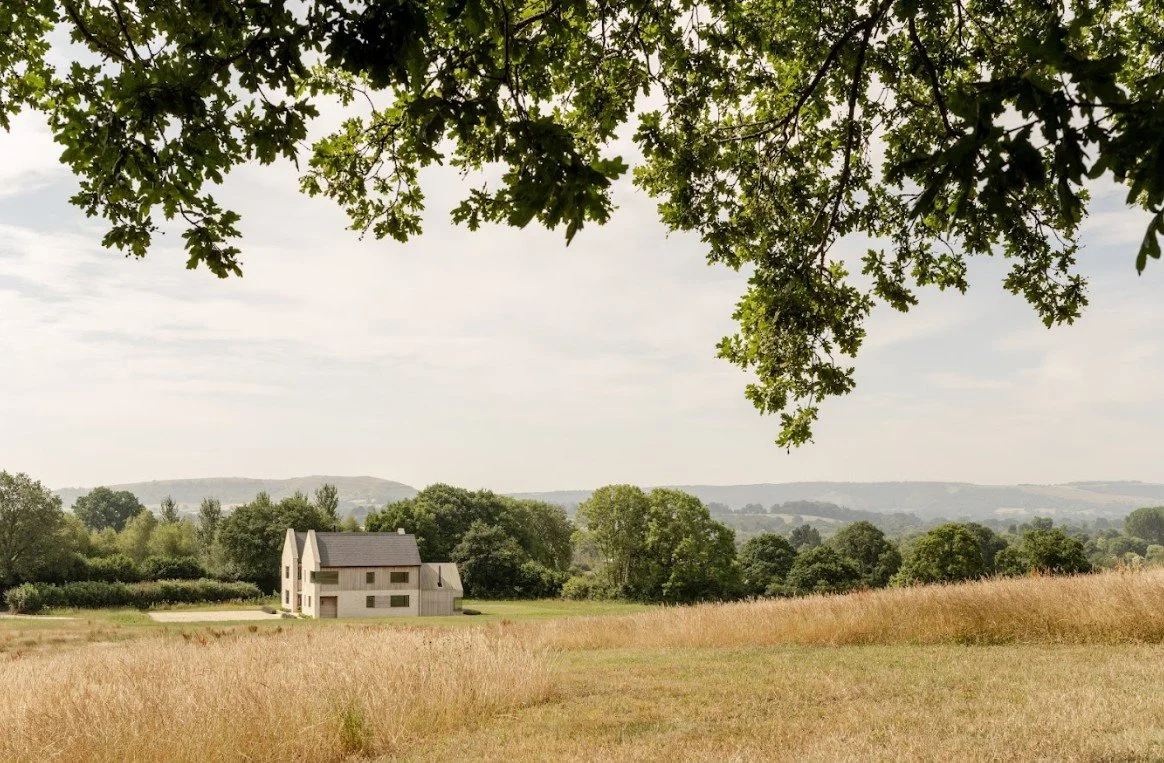
But to truly understand and appreciate Harefield Farmhouse, it is vital to see it in the context of the landscape. Bell walks me up to a magnificent vantage point on the north side of the seven-acre plot upon which Harefield sits. “This house has to be seen and appreciated from the perspective of the land in which it sits. I absolutely love this landscape. It means a great deal to me.”
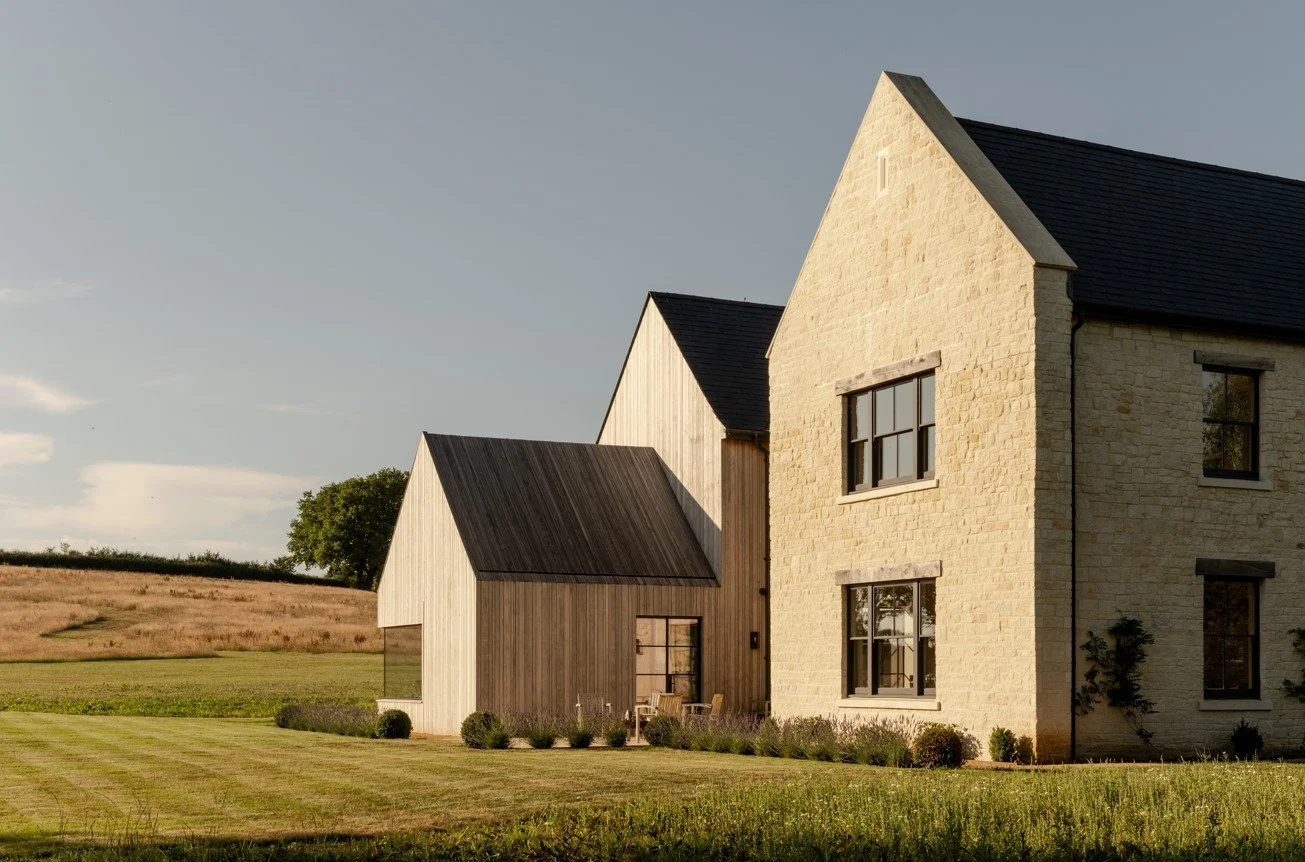
And you can see why. This is, in rural terms, about as close to picture postcard perfection as England gets. As we walk back down the gentle slope—which cleverly hides solar panels and a small wooden substation, providing the vast majority of electricity for the property—through the rides Bell has cut in the long grass for the resident barn owls to fly sorties to catch prey, three young roe deer skip in front of us, seemingly without a care in the world.
Sitting perfectly on a south-westerly orientation, as the sun slowly sets to the west, I reflect that it would be impossible for Bell and his team at RBA not to be proud of what they have achieved with this sublime five-bedroom property, although natural modesty prevents Bell from saying as much.
“It’s funny, even when you have created something like this, you still end up looking at the mistakes. We definitely used too much concrete in the construction, for example. But we learned a lot from that process and as a result will be using considerably less in future projects.”
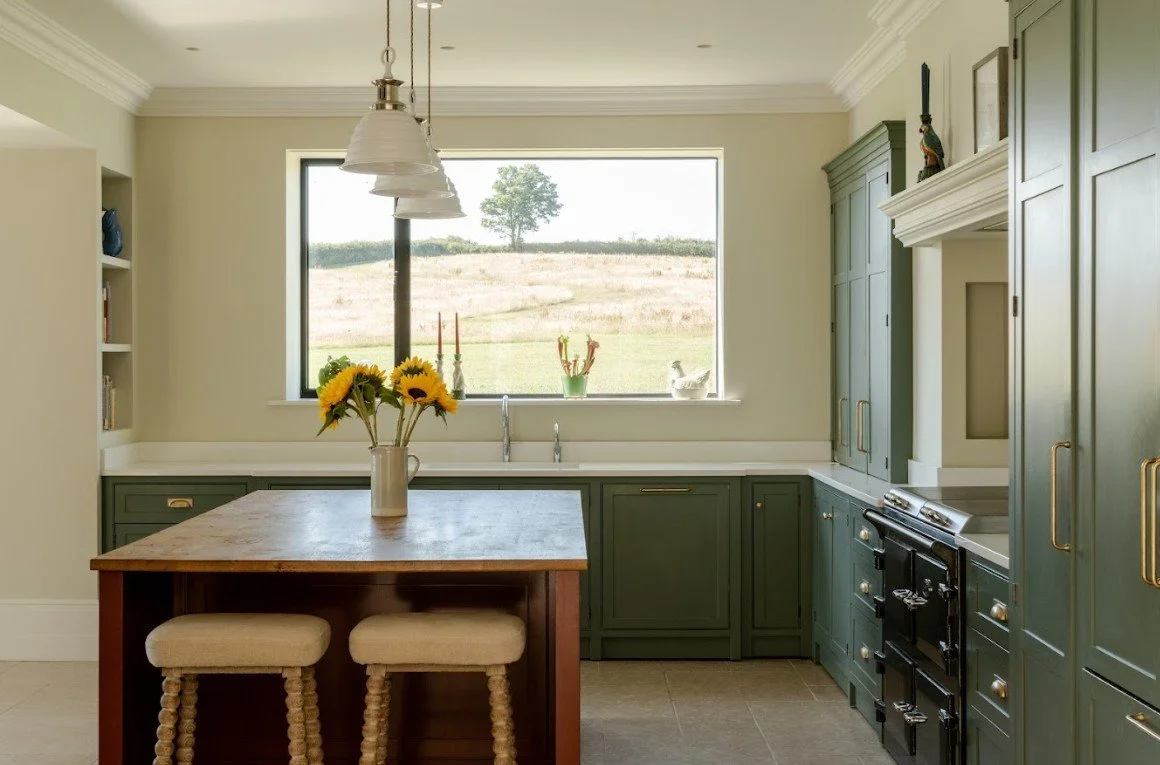
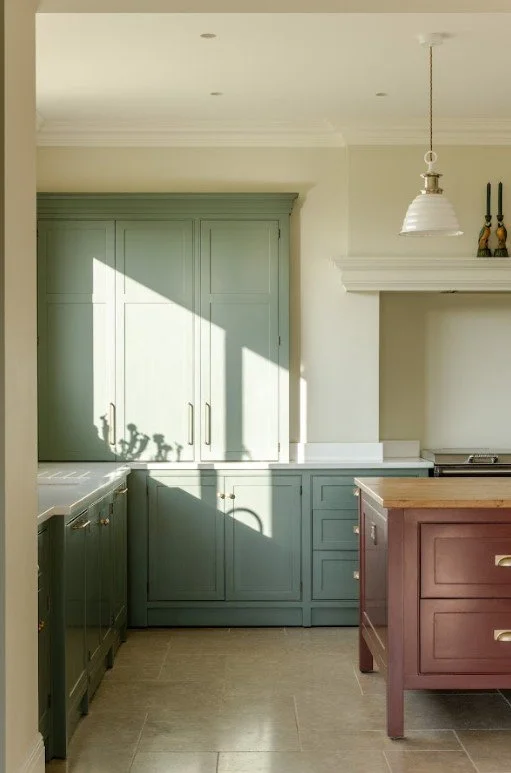
Sitting in the kitchen alone, it is possible to see three different views of the landscape outside, with “picture” windows providing perfect sightlines to enjoy near panoramic views of the perfect brown-red autumn hue of the Dorset scenery. With binoculars perched on one of the window ledges, strategically placed to get an optimum view of the resident barn owls’ nesting box, it is clear Bell is in his element here.
A keen nature and sports enthusiast, Bell has spent almost two decades growing a burgeoning architectural practice, which now employs ten people from their studio on Milford Street in Salisbury. He founded the business when he was made partially redundant soon after the 2008 financial crisis.
“I really enjoyed my time at Quad Architects, but when the financial crisis hit, the directors said, ‘We’re not going to make any of you redundant, but we are all going to have to take a hit together. We can only pay you for three days a week, so if you want to do other work we will understand.’ That’s when I set up Richmond Bell.”
Seventeen years later, RBA is now a flourishing and widely respected architectural practice in its own right. With significant projects across southwest London and the southwest of England, and core values—‘collaboration’ and ‘designing with freedom’—as constant reference points within the team, RBA is increasingly seen as a leader in environmentally led and sustainable practice which is rooted in the local Salisbury community.
“It’s probably been in the last five years that we have really started to think about the sustainability side of things. But it has been building before then. As a design company, we are in a position to educate clients. Buildings and the landscape are always interconnected, and it’s about trying to get the message across to clients that these buildings are living, breathing entities.”
Bell is experienced enough to know the supply chain of genuinely sustainable building materials and products remains limited, although he is positive about a number of new initiatives, including the introduction of rules around Biodiversity Net Gain (BNG), which requires developers to demonstrate their project will deliver measurable improvements around biodiversity.
With a desire to create more exceptional homes, allied to an inbuilt sense of adventure forged in part by a childhood spent roaming outdoor spaces around the military bases where his father was stationed, it is entirely possible Bell and Emms will move on to their next project soon.
But whatever he does and wherever he does it, James Bell will do it with a sense of empathy with nature, calm assuredness, and inner confidence which should put any prospective client at ease.
Ends