

For furniture maker Another Country, sustainability has always been a guiding principle. As a certified B Corporation with an impressive score of 96.8, the company holds itself to rigorous standards across governance, supply chains and environmental impact. It has also been recognised by B Lab under the Land/Wildlife Conservation Impact Business Model (IBM) — a designation reserved for businesses whose core products and services actively preserve or restore natural environments.
It’s recognition that Another Country’s commitment to responsible forestry, thoughtful production and long-term design is embedded deeply within its business model.
We spoke to founder Paul de Zwart about responsible production, longevity as a climate strategy, and the company’s recent partnership with fellow B Corp Goldfinger.
.
Q1. What does B Corp certification mean to you personally, beyond the score?
The score is a useful benchmark, but for me B Corp is about accountability. It creates a structure that forces you to interrogate decisions — sourcing, governance, impact, employee practices. It ensures that values are measurable, not just aspirational. It’s an ongoing commitment to improvement rather than a one-off achievement. It is also about communication; it helps conscious consumers navigate the retail landscape and have trust in how businesses operate.
Q2. Has becoming a B Corp changed how you make decisions?
It formalised values that were already there, but it also raised the bar. B Corp demands rigour — systems, documentation and transparency. That discipline sharpens decision-making because you’re constantly asking whether you can evidence a claim or improve a process. It brings clarity and consistency.
Q3. What does responsible business look like in the design industry today?
It begins with material honesty and supply chain transparency. Designers need to understand where materials originate, how they’re processed and how long a product is intended to last. Responsible business also means resisting constant novelty. The industry doesn’t need more objects — it needs better ones, designed with intention and restraint.
Q4. You often say design begins in the forest. What do you mean by that?
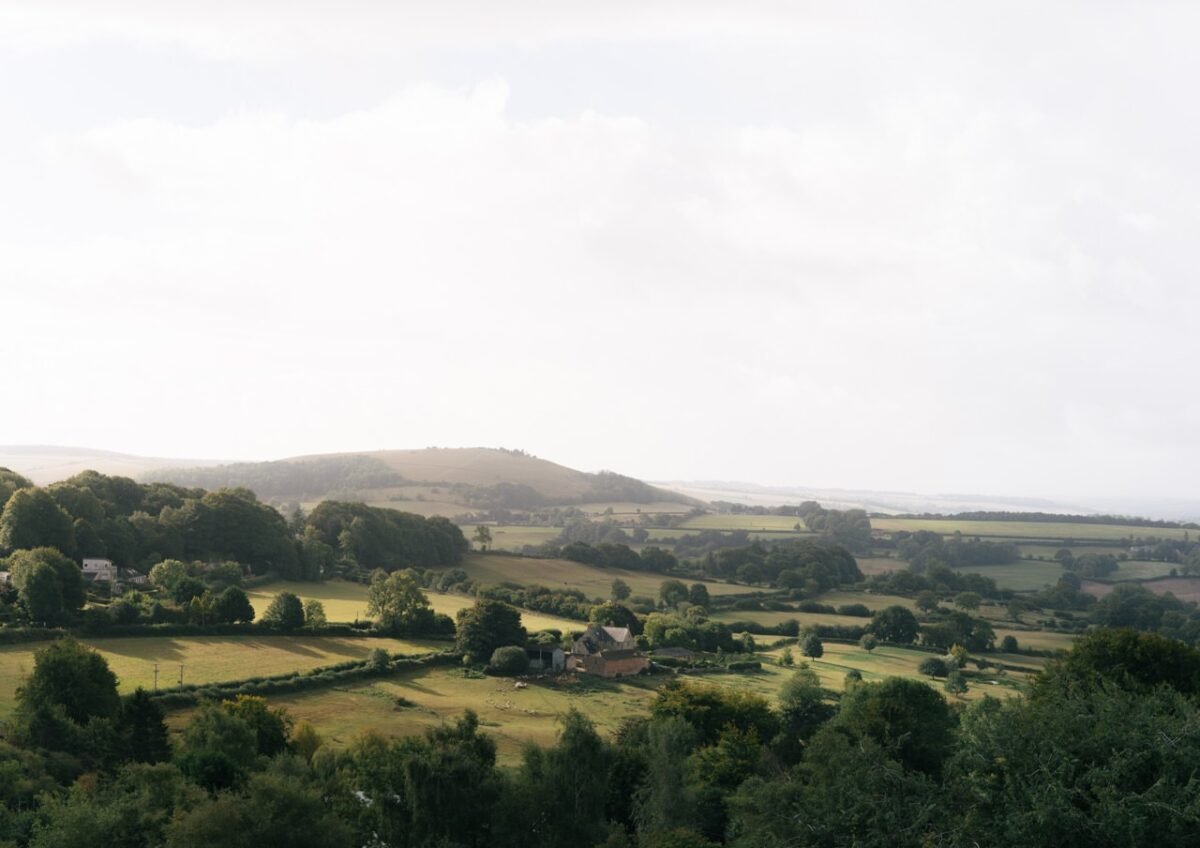
Timber isn’t an abstract material — it grows within living ecosystems shaped over decades. Forests play a vital role in carbon sequestration, biodiversity protection and ecological stability. When we say design begins in the forest, we’re recognising that every piece originates within that system.
The soil, climate and long-term stewardship of a woodland influence the character and strength of the timber. Acknowledging that origin changes how you approach design — it introduces respect and restraint.
As a business recognised under the Land/Wildlife Conservation Impact Business Model, our core activity — producing furniture from responsibly sourced timber — directly supports sustainable forestry and ecosystem resilience. But stewardship doesn’t end with certification. Alongside committing exclusively to certified timber, we support nature recovery through partnerships with Heal Rewilding and the Woodland Heritage Trust, investing in woodland regeneration and biodiversity protection across the UK.
Designing from the forest means understanding we are part of a much longer ecological timeline — and acting accordingly.

Q5. What ethical responsibility accompanies the use of timber?
If a tree has taken 60 to 100 years to grow, the object made from it should justify that time. That responsibility sits in the workshop.
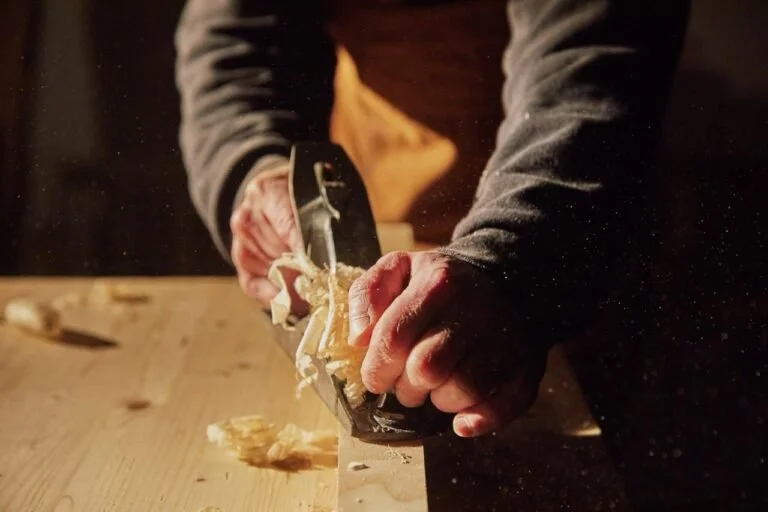
It means designing for longevity and repairability rather than trend. It means using durable joinery instead of short-term fixes, minimising waste in production and working with partners who share those standards. The material sets the expectation.
For us, the ethical obligation is simple: the next life of that timber should be as considered as the first.
Q6. Another Country has been carbon neutral since 2020. How do you approach reduction versus offsetting?
Reduction always comes first. Material efficiency, responsible sourcing and considered logistics all mitigate impact before it occurs. Offsetting addresses emissions we cannot yet eliminate, and it also recognises that all human activity has a carbon cost. The question is about not emitting more as a society than our natural systems can absorb. It is all about equilibrium.
We also take a conservative approach to carbon accounting. While timber stores carbon absorbed during its lifetime, we don’t deduct that embedded carbon unless a product can genuinely be assumed to last over 100 years. Although our furniture is designed for longevity, we choose to fully offset embodied emissions rather than rely on that assumption.
Credibility and transparency matter more than convenience.
Q7. Do you see longevity as a climate strategy?
Very much so. The longer a product remains in use, the lower its annualised carbon footprint becomes. Designing for decades rather than seasons reduces replacement cycles and resource extraction. Longevity is a practical response to climate reality.
Q8. This year marks a new chapter with the majority acquisition of Goldfinger. What drew you to that partnership?
In 2025, we acquired a majority stake in Goldfinger, bringing together two B Corp certified businesses to form one of the UK’s most sustainably led design studios.
What drew me to the partnership was alignment — in values and ambition. Goldfinger’s Treecycling model, low-carbon making and strong community focus complement our commitment to certified sourcing and enduring design.
The partnership strengthens our capabilities across design, making and responsible production. With expanded in-house workshop expertise and a trusted network of UK and Portuguese makers, we can offer customisable collections and bespoke commissions grounded in shared standards. Just as importantly, the Make Good Academy – the social impact arm of the two businesses, connects environmental responsibility with social opportunity.
Q9. How does the Academy reflect that shared vision?
The Make Good Academy, the impact arm of the combined business that grew out of the original Goldfinger Academy, brings the social dimension into focus. Through the Future Makers programme, young people aged 16–25 gain practical woodworking skills, mentoring and clear pathways into employment. The curriculum integrates environmental awareness alongside craft training, connecting material stewardship with opportunity. It’s about building resilience — both ecological and human.
Q10. What would you say to customers who want to buy more responsibly but feel overwhelmed?
Start simple. Buy less. Choose carefully. Ask where materials come from and how long something is meant to last. Look for transparency rather than perfection. Thoughtful decisions, made consistently, have real impact.
B Corp Month is a reminder that business can be structured differently — that profit and purpose can coexist, and that long-term thinking builds resilience.
If you’d like to learn more about Another Country’s sustainability commitments and the work they are doing with Goldfinger and the Make Good Academy, you can explore their ethos page here.
Ends